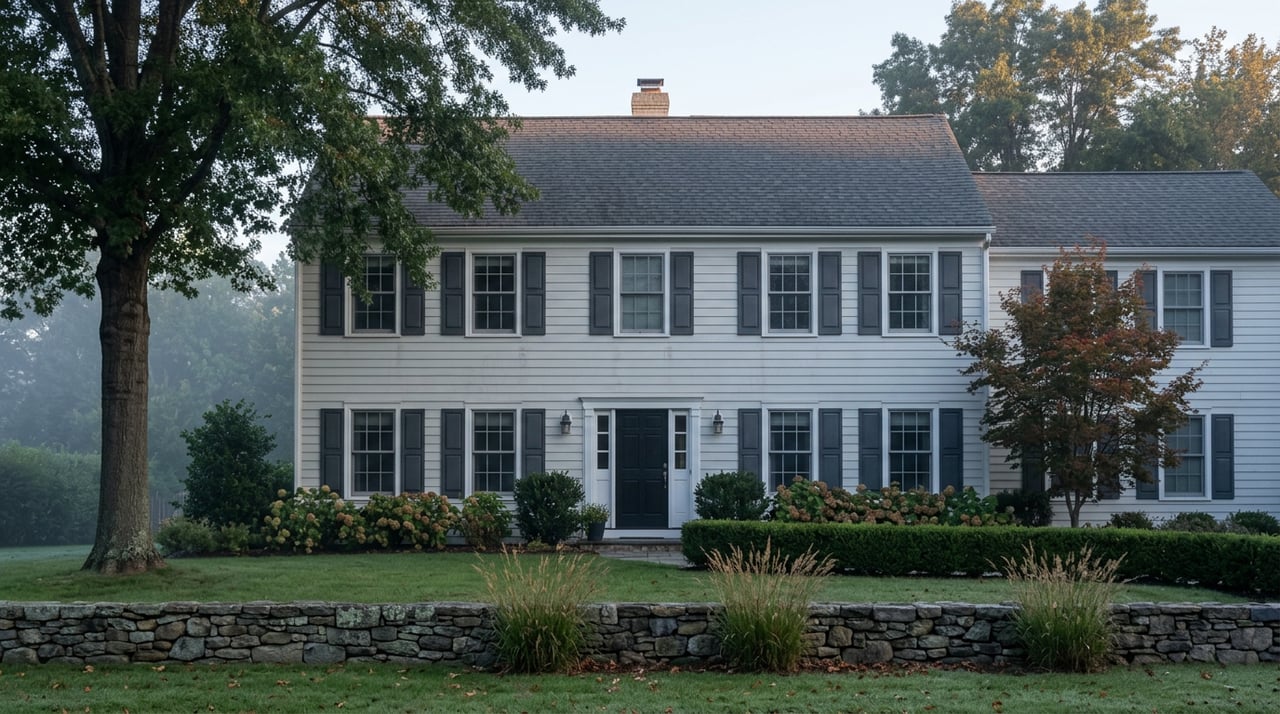
There is no restaurant in Oak Hill. No coffee shop, no dry cleaner, no gas station. Not because nobody has tried, but because the city has no commercial zoning at all. Oak Hill is, by design, entirely residential: roughly 1,800 homes spread across eight square miles of Davidson County, with the Tennessee Governor's Residence and fifteen churches as its only landmarks that aren't somebody's driveway.
Which makes it a little strange that Oak Hill's Board of Commissioners has spent more meetings than anyone expected arguing about fences.
The debate started over a year ago and rolled through multiple sessions last summer and fall before resurfacing at the April 2026 meeting, where commissioners reviewed an updated draft ordinance governing fence height, materials, and placement, modeled directly on the fence rules already on the books in neighboring Forest Hills. On paper, it is a zoning technicality. In practice, it split the room. Some residents wanted no new rules at all, arguing that what happens on a private lot should stay a private decision. Others pushed for standards to protect what the city calls its open character, the low fences and long sightlines that let one yard blend into the next. A third group objected specifically to front yard fences, on the grounds that a fence facing the street works against the sense of shared community Oak Hill has spent decades cultivating.
None of those positions is wrong. What's interesting is that Oak Hill is having this argument at all, in a city small enough that every resident could plausibly know every other resident's opinion on it.
A City That Incorporated to Avoid Being Absorbed
Oak Hill exists as a city because of a decision made in 1952, just before Nashville and Davidson County merged into a single metropolitan government. Rather than become another neighborhood inside that new Metro structure, Oak Hill incorporated on its own, choosing a manager-commission government where an elected Board of Commissioners picks its own mayor and vice mayor. It has stayed that way ever since, a satellite city inside the metro family that runs its own zoning, its own planning commission, and its own board of zoning appeals.
The boundaries drawn at incorporation still define the place today. Oak Hill runs along Old Hickory Boulevard to the south, Woodmont Boulevard to the north, and I-65 to the east, with General Bate Drive, Granny White Pike, and a stretch near Bright Hour Farm marking the western edge. Inside those lines sits land that was, in the 1790s, a horse-breeding farm called Travellers Rest, established by Judge John Overton. The postwar building boom that reshaped so much of Nashville reached Oak Hill too, but the city's founding choice, to stay small, stay residential, and control its own land use, is the reason it still looks the way it does.
That founding choice is also the reason the fence ordinance mattered enough to argue about for a year. It was never really a debate about lumber and vinyl. It was a debate about who gets to decide what "open character" means when the whole point of the city was to protect it.
The Same Argument, Different Building
This is not the first time Oak Hill's planning process has turned into a referendum on visibility and control. City records show the planning commission has, in past hearings, rejected proposed structures that residents felt didn't belong, including one case near Curtiswood Lane and Glen Leven where a resident testified against a proposed underground facility. Part of the objection was practical, concerns about driveway design and vehicle access. But part of it was about the building itself, and one line from that testimony captures the pattern well:
"It's not really open to the public. It's behind a fence."
That's the throughline. Oak Hill residents scrutinize what enters their sightlines, whether it's a proposed structure near a historic property or the height of a neighbor's backyard fence. The city's entire regulatory apparatus, small as it is, exists to referee exactly that kind of dispute.
The Interstate Is Having Its Own Version of This Fight
The same instinct is playing out right now, at a larger scale, over I-65 itself. The interstate forms Oak Hill's eastern border, and the city is currently in the public comment window for the I-65 Corridor Planning and Environmental Linkages Study, a regional look at how that stretch of highway should evolve. The Board of Commissioners held a special called meeting on September 1, 2026, and has a regular meeting scheduled for September 22, both partly in response to the study's timeline.
Interstate planning studies rarely draw much attention from residents who live nowhere near the corridor in question. Oak Hill is different, because I-65 isn't background noise here, it's a named boundary line on the city's own map. Any recommendation that comes out of the PEL study, whether it touches sound mitigation, access points, or future capacity, lands directly on a city that has spent 74 years deciding, block by block, what its edges are allowed to look like. The same commissioners who spent a year on fence height are now weighing in on what happens along the one border they don't fully control.
Money is part of this story too. A winter ice storm earlier this year pushed cleanup costs past the $1 million the Board of Commissioners had already approved pulling from reserves, forcing a budget amendment to cover storm response, cleanup, and infrastructure restoration. The city also brought on Debra Dutcher as its new Certified Municipal Financial Officer this spring and closed out a litigation settlement with Churchill Properties at no cost to the city. None of it is dramatic on its own. Together, it's a small city government doing the unglamorous work of keeping its own house in order while it also tries to have a say in decisions made well above its pay grade, like the future of an interstate corridor run by the state.
Why the Boundary Keeps Coming Up
Here's the pattern, once you see it. Oak Hill's identity has never been about what's inside its borders, since there's almost nothing commercial inside them to point to. Its identity is the border itself, and how much control the city retains over what happens at its edges. A fence marks the edge of a lot. A planning commission hearing marks the edge of what the community will accept. An interstate corridor study marks the edge of the city's actual jurisdiction, the place where Oak Hill's opinion matters but state transportation planners make the final call.
That's worth knowing if you already live here, because it explains why an item as small as fence height can occupy a Board of Commissioners for a year, and why a regional highway study is getting the same level of attention from city government as a zoning ordinance. It's not bureaucratic overreach. It's a very small city doing the one thing it was built to do: deciding, meeting by meeting, what its own edges are for.
If you're weighing a move to Oak Hill or trying to make sense of what a city this size actually feels like to live in day to day, that's the kind of texture that doesn't show up in a listing description. Kayla Jarmon works this part of Middle Tennessee closely enough to walk you through it in person, boundary lines, fence rules, and all.